

darkly academic .
essay | books that are ACTUALLY considered "Dark Academia", a mega-list

Ever since the conception of this internet trend, literature has been latched to it. It has become almost a necessity, a rite of passage, to read The Secret History if one wishes to get involved in this “aesthetic”. In a similar vein, authors have begun to market toward these internet trends instead of writing an actual engaging plot.
Now, I must preface this by saying you can absolutely enjoy these books. I enjoyed most of these books, and think The Secret History is one of my favourites. But the internet has corrupted our critical thinking, our ability to critique something that we like. Nothing is perfect, and if one gets upset because another doesn’t like their favourite book, or is critiquing it, they are simply immature. But I am also not an oracle, and you can disagree with my views here! I encourage it! How boring would we all be if we merely agreed with one another?
Anyway, disclaimer over!
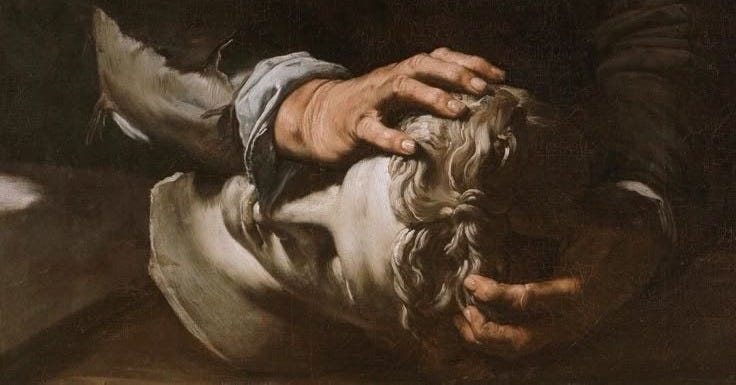
Caravaggio, Dostoevsky, romanesque architecture, Erik Satie — the very Avengers of Dark Academia as an aesthetic. Renaissance and baroque paintings, existentialist Russian literature, the Cologne Cathedral (specifically) and Greek statues, classical and modernist music; all fit within this study-orientated aesthetic. Though one can be involved in this community through merely the fashion or decor, I do find that whenever one asks for a “Dark Academia” book recommendation, there is a great lack of texts that are not merely written for “the vibe.”
The texts I always see are of course The Secret History, If We Were Villains, Babel, and Ninth House. I dislike two of these books, I find one a blatant attempt to copy another’s “vibe”, and I like the other.
But what they all have in common is that under any comment section requesting DA books, these will be recommended. There’s nothing wrong with that, should the commenter be looking for a book that matches purely the “vibe” of DA, but that is not the epitome of the aesthetic, and you should absolutely be broadening your horizons if you wish to truly engage with the trend (in my humble opinion).
(I would also advise you avoid Babel at all costs as it’s an awful, awful novel… but I do also know that that is merely my opinion! As a writer, I despise that book lol).
There are books that I believe encompass this Darkly Academic vibe without having been written FOR the aesthetic, if you see what I mean. Books you would find Camilla Macauley enjoying tremendously. Not only will they hopefully scratch that DA itch, but they are books that I believe are must-reads for any hobbyist, or true, academic. Let it widen your scope — you can also impress strangers by saying you’ve read Dostoevsky lol.
Your Author’s Top Picks

Christopher Marlowe’s Dr. Faustus or, Goethe’s Faustus
“The Tragical History of the Life and Death of Doctor Faustus, commonly referred to simply as Doctor Faustus, is an Elizabethan tragedy by Christopher Marlowe, based on German stories about the title character Faust, that was first performed sometime between 1588 and Marlowe's death in 1593. Two different versions of the play were published in the Jacobean era, several years later. The powerful effect of early productions of the play is indicated by the legends that quickly accrued around them—that actual devils once appeared on the stage during a performance, "to the great amazement of both the actors and spectators", a sight that was said to have driven some spectators mad.”
John Williams’ Stoner
“William Stoner is born at the end of the nineteenth century into a dirt-poor Missouri farming family. Sent to the state university to study agronomy, he instead falls in love with English literature and embraces a scholar’s life, so different from the hardscrabble existence he has known. And yet as the years pass, Stoner encounters a succession of disappointments: marriage into a “proper” family estranges him from his parents; his career is stymied; his wife and daughter turn coldly away from him; a transforming experience of new love ends under threat of scandal. Driven ever deeper within himself, Stoner rediscovers the stoic silence of his forebears and confronts an essential solitude.”
Mary Shelley’s Frankenstein
“Few creatures of horror have seized readers' imaginations and held them for so long as the anguished monster of Mary Shelley's Frankenstein. The story of Victor Frankenstein's terrible creation and the havoc it caused has enthralled generations of readers and inspired countless writers of horror and suspense. Considering the novel's enduring success, it is remarkable that it began merely as a whim of Lord Byron's.”
Dante Alighieri’s The Divine Comedy
“The Divine Comedy begins in a shadowed forest on Good Friday in the year 1300. It proceeds on a journey that, in its intense recreation of the depths and the heights of human experience, has become the key with which Western civilization has sought to unlock the mystery of its own identity.”
Oscar Wilde’s The Picture of Dorian Gray
“Enthralled by his own exquisite portrait, Dorian Gray exchanges his soul for eternal youth and beauty. Influenced by his friend Lord Henry Wotton, he is drawn into a corrupt double life, indulging his desires in secret while remaining a gentleman in the eyes of polite society. Only his portrait bears the traces of his decadence. The Picture of Dorian Gray was a succès de scandale. Early readers were shocked by its hints at unspeakable sins, and the book was later used as evidence against Wilde at the Old Bailey in 1895.”
Fyodor Dostoevsky’s Crime and Punishment
“Raskolnikov, a destitute and desperate former student, wanders through the slums of St Petersburg and commits a random murder without remorse or regret. He imagines himself to be a great man, a Napoleon: acting for a higher purpose beyond conventional moral law. But as he embarks on a dangerous game of cat-and-mouse with Porfiry, a suspicious detective, Raskolnikov is pursued by the growing voice of his conscience and finds the noose of his own guilt tightening around his neck. Only Sonya, a downtrodden prostitute, can offer the chance of redemption. As the ensuing investigation and trial reveal the true identity of the murderer, Dostoyevsky’s dark masterpiece evokes a world where the lines between innocence and corruption, good and evil, blur and everyone’s faith in humanity is tested.”
(Descriptions from Goodreads)
Ancient Texts Of Antiquity
The Odyssey by Homer
The Bacchae by Euripides
Letters from a Stoic by Seneca
The Iliad by Homer
Sappho’s poetry
The Epic of Gilgamesh
The Aenid by Virgil
Metamorphoses by Ovid
Antigone by Sophocles
Meditations by Marcus Aurelius
The Republic by Plato
The Art of War by Sun Tzu
Zhuangzi
Dear Philosophers
Søren Kierkegaard
Friedrich Nietzsche
Mary Wollstonecraft Shelley
Virginia Woolf
Niccolo Machiavelli
Henry David Thoreau
Socrates
Immanuel Kant
Hannah Arendt
Karl Marx
David Hume
Simone de Beauvoir
Anne Conway
Poets To Elevate The Soul
Lord Byron
Percy Bysshe Shelley
Emily Dickinson
The Brontë Sisters
John Keats
William Shakespeare
Edgar Allan Poe
Algernon Charles Swinburne
H.P Lovecraft
Rainer Maria Rilke
Christina Rossetti
Lord Tennyson
Non Fiction, and Topics to Pursue
The Immortal Evening by Stanley Plumley
Mariner by Dr Malcolm Guite
The Penguin Book of Witches
Poison by Ben Hubbard
Journal of a Plague Year by Daniel Defoe (Semi-autobiographical)
The Life of Charlotte Brontë by Elizabeth Gaskell
Records of Shelley, Byron and the Author by Edward John Trelawney
Ancient Sociology
Ancient Architecture and Art History
Ancient Anthropology (Greeks, Romans, Celts, Mesopotamia — any ancient civilisation)
Cosmology
Magical History and The Arcane
Supernatural Folklore
Specific Artist/Art Movement History
Royal/Governmental History of Any Country
Dark Botanicals — Poisons and Fungi
Plague and Sicknesses
Executions/Judicial/Punishments
Author Biographies/Autobiographies
Other Darkly Academic Texts
Steppenwolf by Herman Hesse
Narcissus and Goldmund by Herman Hesse
The Last Man by Mary Shelley
The Historian by Elizabeth Kostova
The Monk by Matthew Lewis
Romance of the Forest by Ann Radcliffe
The Master and Margarita by Mikhail Bulgakov
The Metamorphosis by Franz Kafka
The Red and The Black by Stendhal
Caleb Williams by William Godwin
The Penguin Book of Hell
The Penguin Book of Demons
The British Library Tales of the Weird
To The Lighthouse by Virginia Woolf
The Bell Jar by Sylvia Plath
The Strange Case of Dr Jekyll and Mr Hyde by Robert Louis Stevenson

Of course, there are other texts that one could read that fits onto this list, so if you know of any do share in the comments below!
Thank you for reading! If you wish to support me, do leave a like! If the mood takes you, do consider becoming a paid subscriber too for exclusive posts and full access to my archive. Or, you can tip me on Buy Me A Coffee (Substack I beg you implement one-off tips please!)
Please check out my latest posts! <3



what i wish people understood is that a setting or a character trope is not what automatically defines ANY genre. there is a feel, a prose style, a plot type, tendencies and certain lessons and all sorts of other things that defines a single genre. (and then of course we have the subgenres, but that gets very complicated.) that being said, i cannot lie. i hated Ninth House and i couldn't finish it. it bored me and felt so, so, so cliche.
All excellent picks and recommendations. I love Dark Academia as both a genre and aesthetic (I love earth tone skirts and have a problem 😭).
The Starless Sea by Erin Mortgensten was the first DA book I read. I thought it was okay, the plot and setting piqued my interest, but I didn't find the main character very likeable. Things just _happend_ to him, and he wasn't very interesting.
Frankenstein is obv a banger though.
I gotta check out some of the others on this list!